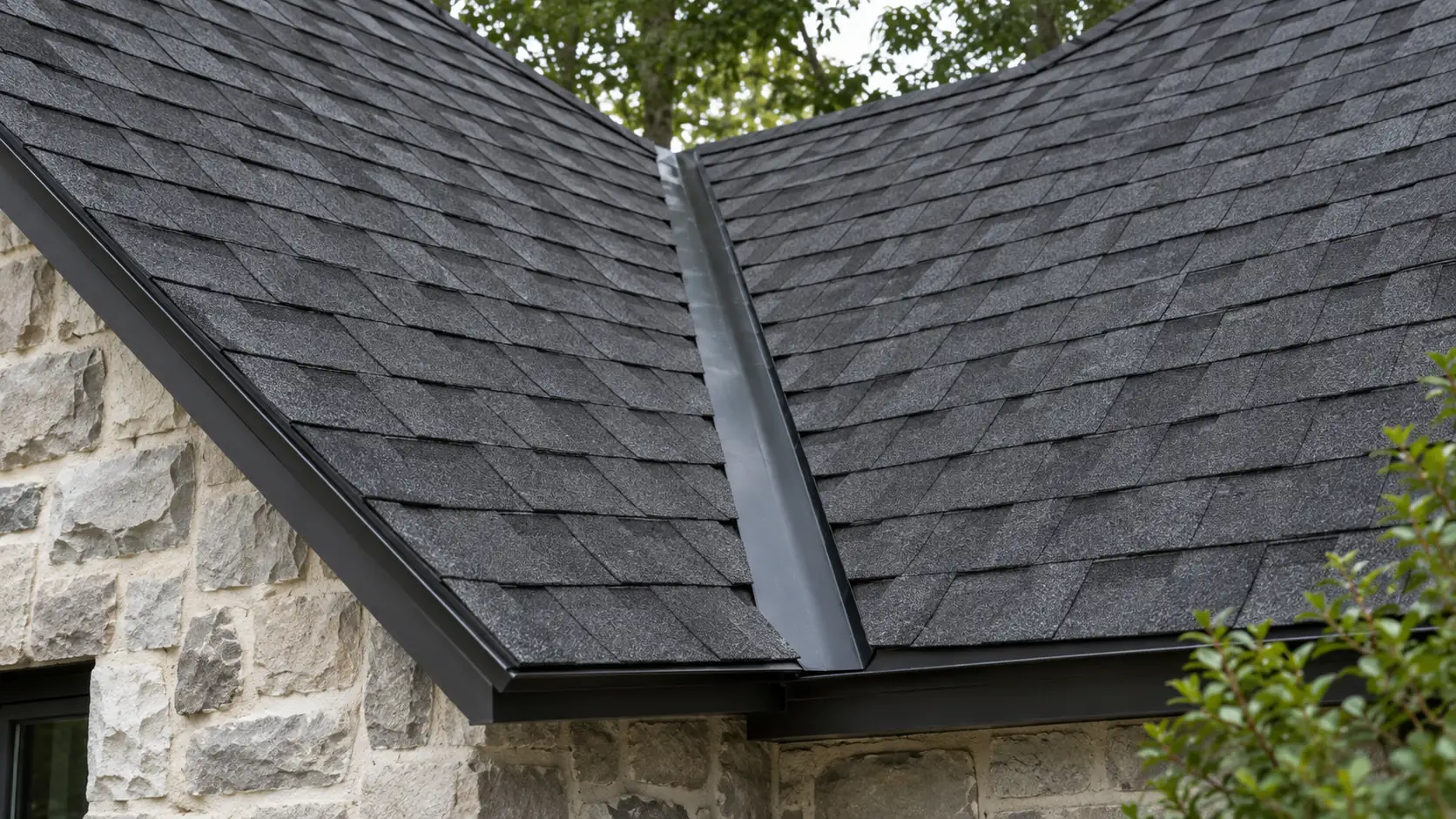
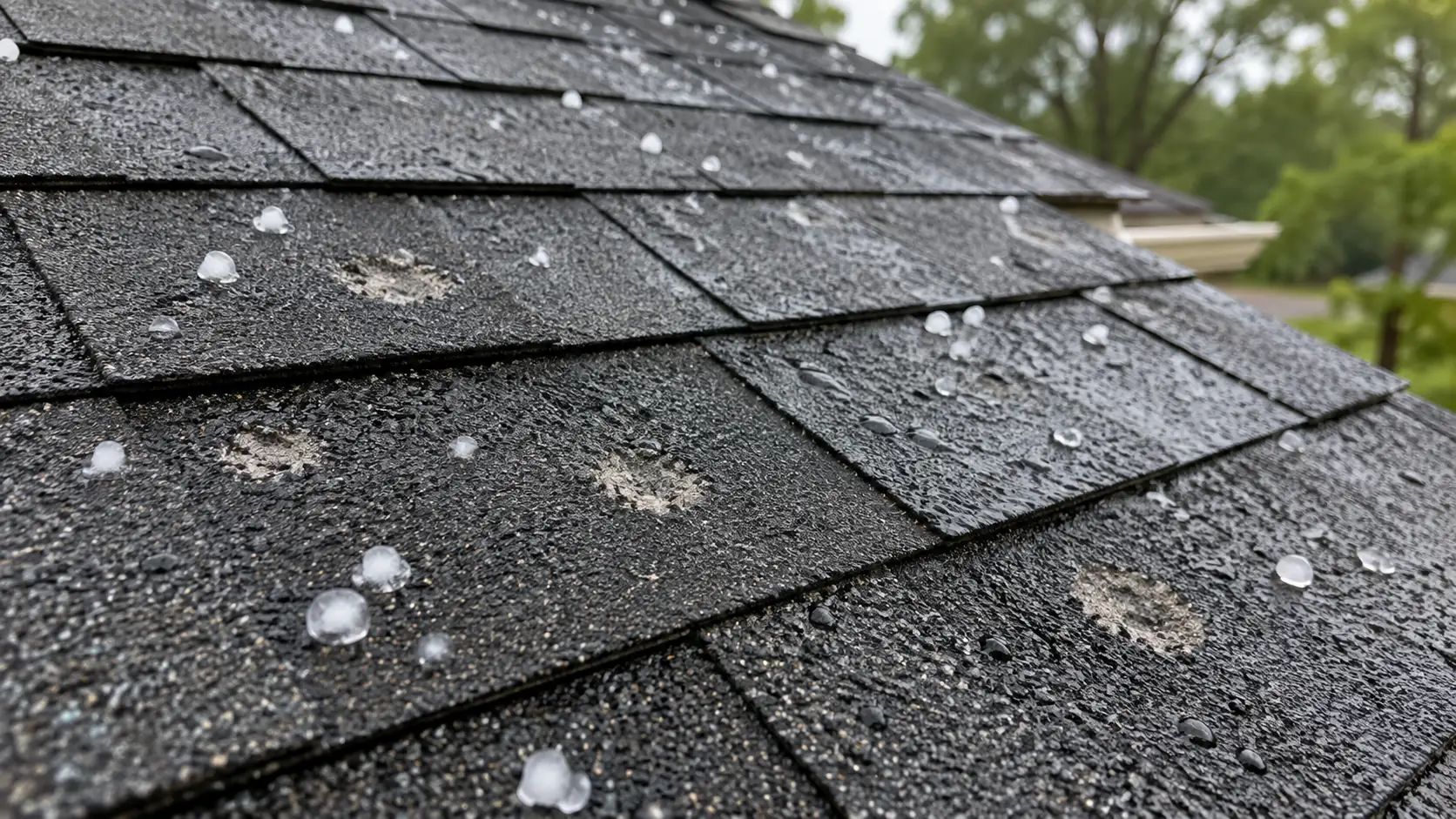

Middle Tennessee sits in a genuine hail corridor — most springs deliver at least one event dropping quarter-size or larger hail somewhere between Nashville and the Kentucky line. Yet most hail-damaged roofs are never inspected, because from the driveway they look fine.
Here's what we actually check, in the order we check it. You can safely verify the first six from the ground.
Every slope photographed, every finding documented — before anyone files.
Section 01
From the ground
1. Gutters and downspouts — dents and granules. Aluminum gutters dent at hail sizes that damage shingles. While you're there, look below downspout exits: piles of coarse black granules mean impacts stripped protective surface off the shingles above.
2. Soft metals everywhere. AC condenser fins, mailboxes, metal fence caps, grills, window screens and wraps. Adjusters call these "collateral indicators" — hail that dented your AC fins didn't skip your roof.
3. Cars, decks, and paint. Dings on vehicles that were home during the storm, chipped deck stain, splatter marks on oxidized surfaces. All of it corroborates the date and intensity.
4. Roof vents, flashing, and skylights. Binoculars help: dented box vents, cracked skylight frames, dinged chimney flashing.
5. Shingle debris in the yard. Fresh granule wash or shingle fragments after the storm.
6. The neighborhood signal. Inspection trucks and new roofs on your street mean adjusters are already scoping your storm. Hail cells don't skip houses — they paint swaths.
Section 02
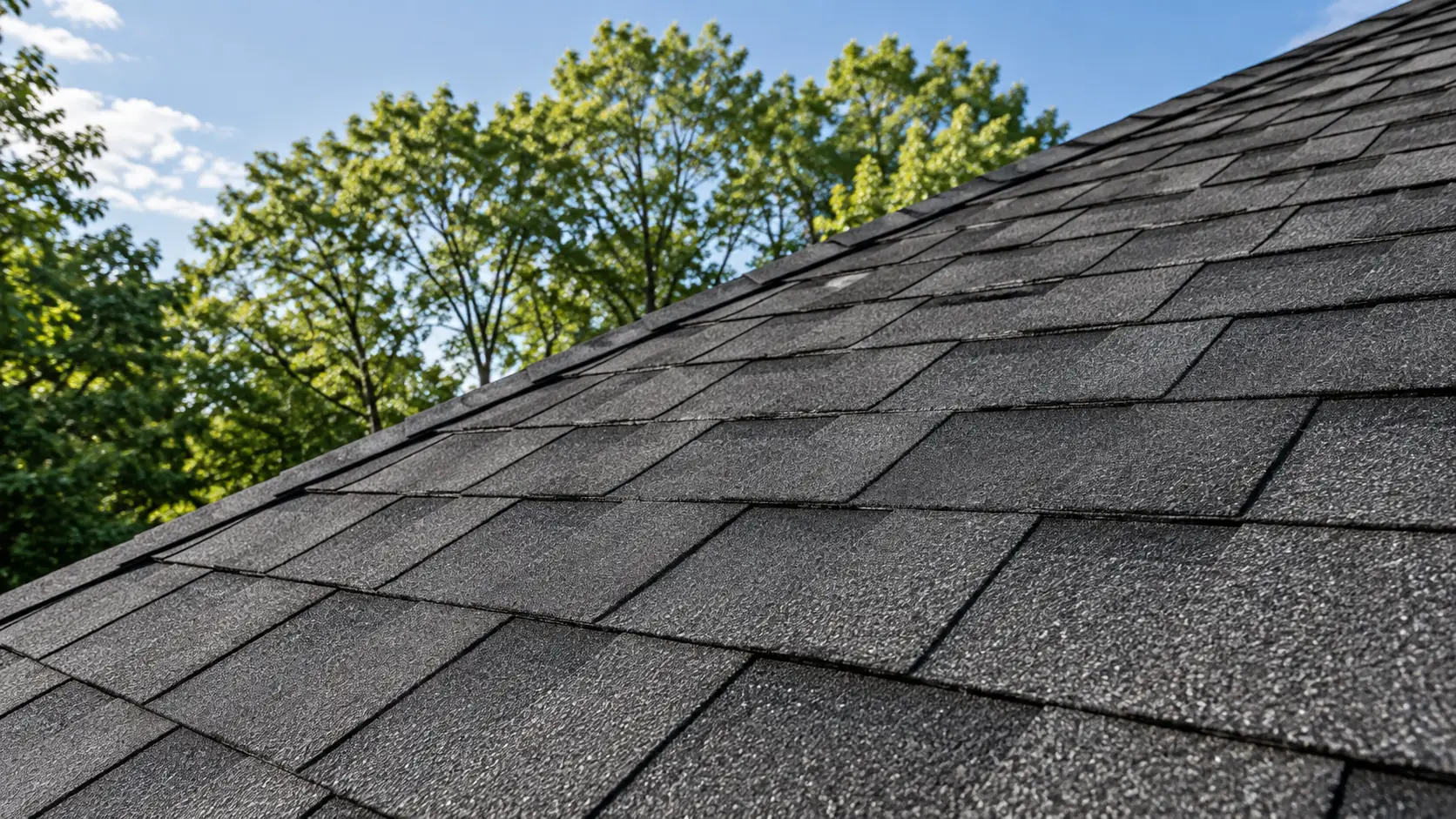
On the roof (leave this part to us)
7. Bruises. The signature: dark spots the size of the hail, granules crushed into the mat beneath, slightly soft underfoot pressure. Bruises don't leak today — they fail in 2–5 years, after your claim window closes.
8. Mat fractures. On older or larger-hail impacts, the fiberglass mat cracks — visible as star patterns when granules are brushed aside. This is functional damage by any carrier's definition.
9. Impact density per slope. Claims are evaluated per "square" (100 sq ft) and per slope — typically 6–8+ confirmed impacts per test square signals replacement-level damage. This is exactly what we chalk and photograph for the adjuster.
Section 03
What to do with what you find
If you checked two or more boxes from the ground: get a professional inspection while the storm date is fresh. Free, documented, and decisive — either you have a claim-worthy roof with the evidence to prove it, or you have written peace of mind.
And a warning that bears repeating every hail season: the crews knocking doors the week after, offering to "handle everything" and "take care of your deductible," are the reason Tennessee homeowners lose money on storms twice. Here's how to spot them.
Think your roof took hail this season? Request a free documented inspection — if there's no claim there, we'll tell you straight.